


Ponte City: 'Back To The Future'
A COLOURFULL HISTORY (2)
”Originally we wanted to put in a ski slope with tunnels and everything at the bottom. But that didn't end up happening. Much later a bowling alley was put in. I don’t think anyone has really ever cracked what to put in that space.
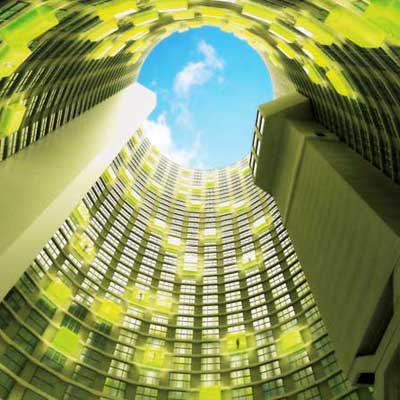
You have to make a jewel down at the bottom there – something to bring the light down,” he says.
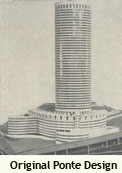
Heeding those words of advice, Kgaswe’s vision is to make the core the literal centre of attention.“The name Ponte actually comes from one of the original owner of the piece of land, Mr Ponte,” says Grosskopf.
The architects had to file with the City Council, and they just wrote in Ponte as the name of the building. From then on, everyone referred to the building as Ponte. “Afterwards we tried to rationalise it – Ponte means ‘bridge’ in Portuguese, so we would say Ponte is a bridge between heaven and earth,” he says.
“I’d love to see Ponte going back to what it once was – an island where people could live happily – where people would really enjoy being there. If you think of any building in Berea or Hillbrow, I think Ponte has the best chance of recovery. It’s a bit of an island so it’s secure. It could really lead the regeneration of the whole area,” he concludes.
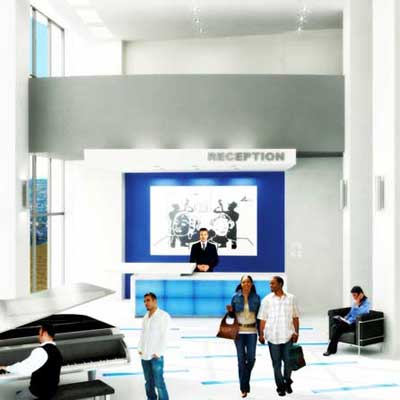
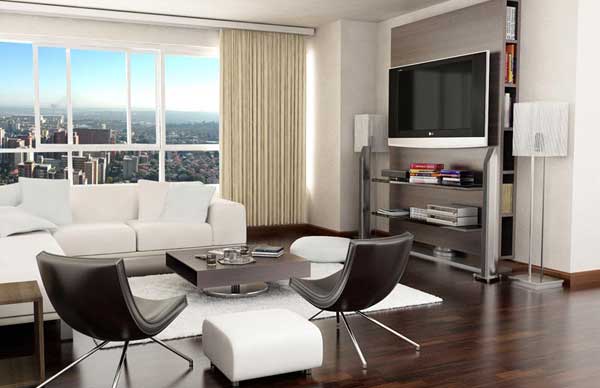
A proposal in the mid-1990s to turn the building into a high-rise prison fortunately never came to fruition, and the building changed ownership in early 2007. The team behind the R200-million makeover believes apartments will soon be regarded as hot property, especially in the build-up to the 2010 Soccer World Cup Final. “It's an amazing building, very symbolic of the ‘brutalist’ architecture of its time,” says Belgian-born, Moroccan developer Nour Addine Ayyoub, one of the project's masterminds along with South African partner, David Selvan.
Project overview
Development
Project Brief: Complete refurbishment
Status: Under construction
Client: Investagain
Address: Lily road, Berea, Johannesburg
Land: 12,392 m2
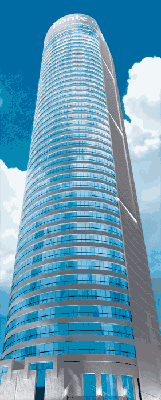
Building: 54 storeys
Number of flats: 467
Information: Ponte City Web Site
Discuss: Facebook Ponte Group
Features
Other Projects
Commercial projects
- Shopping Centre, Springs
- Shopping Centre, Ouklip
- Office Park, Blairgowrie
- Conference Centre, Limpopo
- Artist Studio, Benoni